- Home
- Collecting & Sculpting
- Clay Sculpture Detailing
Clay Sculpture Detailing & Finishing Techniques
A world class renowned sculptor explains clay sculpture detailing in depth. By Peter Holland, Master Ceramic Sculptor | Updated December 2025Introduction
This page looks at sculpture detailing for clay modeling – from fine finessing to lace, trims, folds & foliage
With composition locked in, the final stage of clay sculpting is all about refinement. This page continues the journey started in the core process guide and the master‑sculpture case study, focusing on the clay sculpture detailing that turns a sound figure into a true collectible:finessing, folds, lace foliage, and the tiny decisions that serious collectors use to judge quality and authenticity.
We will be looking at when clay becomes collectible, the why and how.
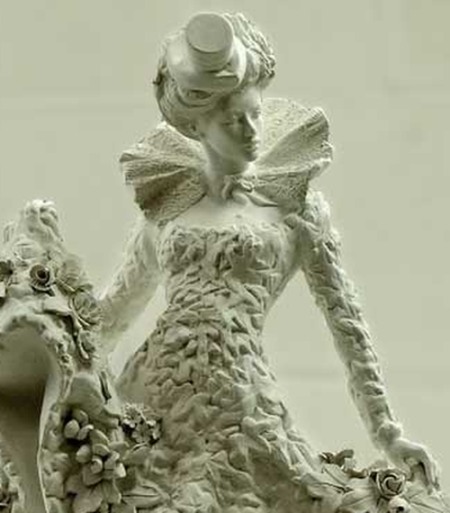
With composition finalised and factory requirements met, attention turns to the refinement that creates true collectible excellence.
This is the stage where clay sculpture detailing turns a well-composed figure into a piece collectors will pay premiums for and remember decades later.
Whether you are learning how to make clay figures at home or sculpt from clay for factory production, the same principle applies: detail only succeeds when it rests on solid structure. Everything in this page assumes you have followed the core process from concept to composition (Part 1) and, if relevant, the master sculpture creation workflow for factory production (Part 2), or the section on Tools for Clay Sculpting - Basic to Advanced.
📋 Page Contents
- The Iron Rule: No Detail Before Structure
- Stage 1: Surface Preparation and
- Stage 2: Brush Finishing
- Stage 3: Pressing – Pattern and Texture Without Chaos
- Stage 4: Sprigging – Repeated Detail Done Professionally
- Stage 5: Hair – Controlled Randomness
- Stage 6: Fine Faces & Hands – Integration, Refinement & Character
- Stage 7: Fabric Folds – Sculpting Movement and Weight
- Stage 8: Flowers and Botanical Details (The Factory Split)
- Timeline Reality: What Detailing Actually Takes
- From Detailing to Authentication – The Collector's Lens
- Summary - The Discipline of Clay Sculpture Detailing
- Completing the Page Journey
The Iron Rule: No Detail Before Structure
By the time fine detailing begins, the sculpture must have passed all earlier checkpoints:
- ✓ Composition and gesture work from every angle
- ✓ All parts built, joined, and structurally sound
- ✓ Factory mold-making constraints addressed
Once detailing starts, major changes become brutally expensive. Many sculptors learn the hard way: forty hours spent perfecting intricate dress details and folds that later has to be removed because the pose is wrong or awkward.
In my studio, I never touch clay sculpture detailing until I can rotate the piece and feel no nagging doubt about pose, balance, or structure, and most importantly, the design director for Compton & Wood house has signed it off as what they want.
For collectors: This is why some figurines feel "right" from every angle, while others seem awkward or under or overworked. Strong detailing is always the end of a disciplined sequence, never the rescue of a weak foundation.
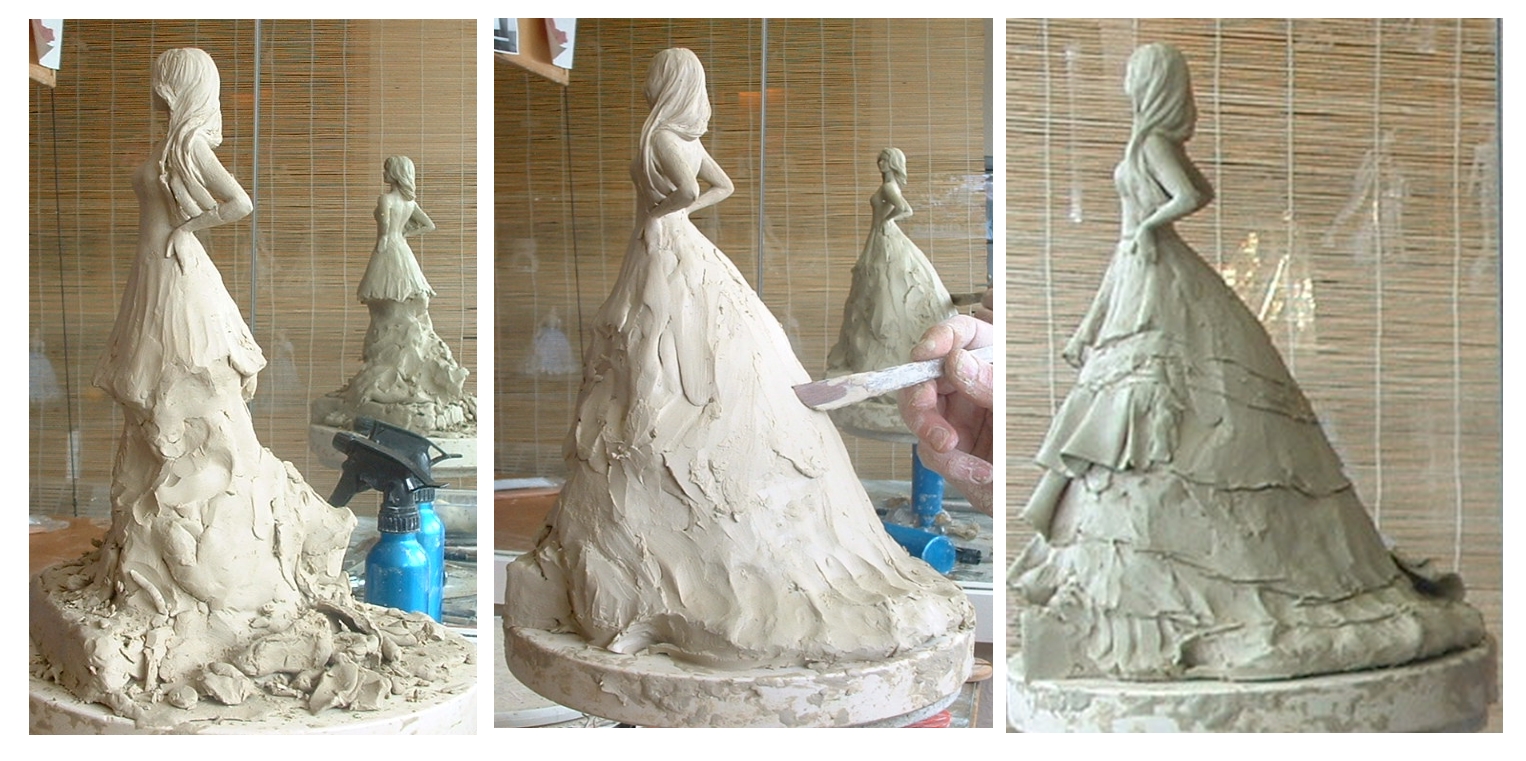
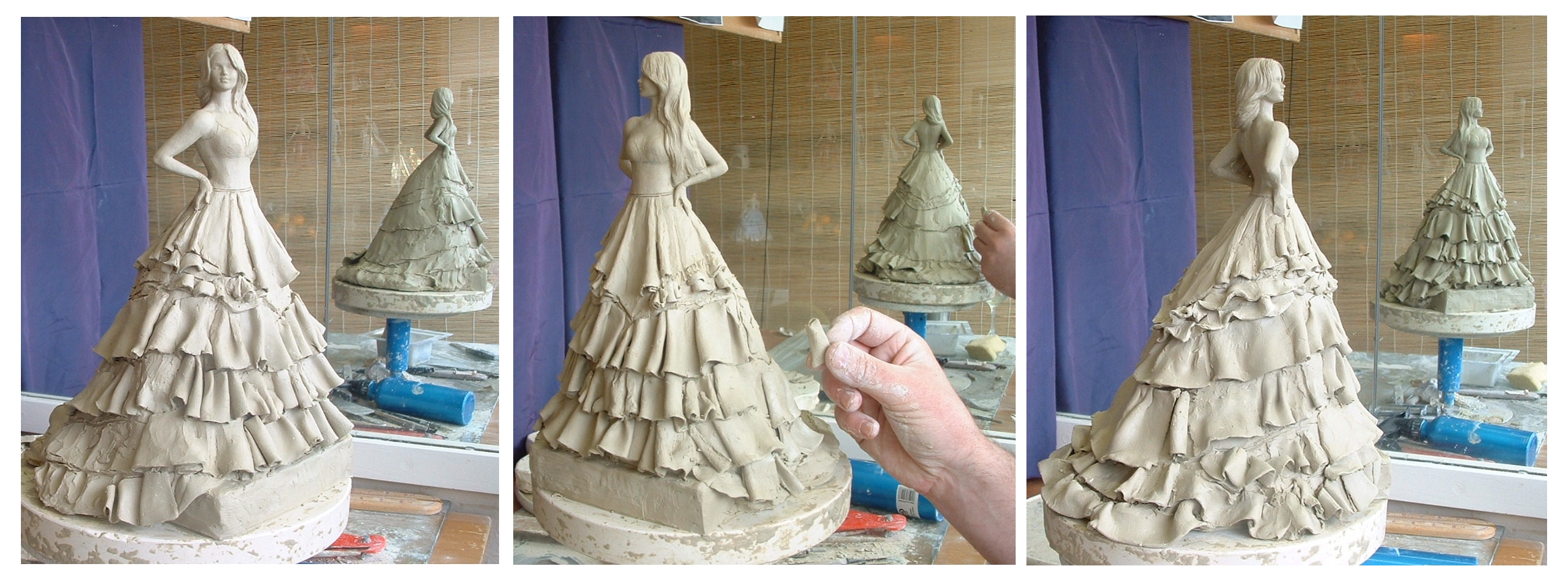
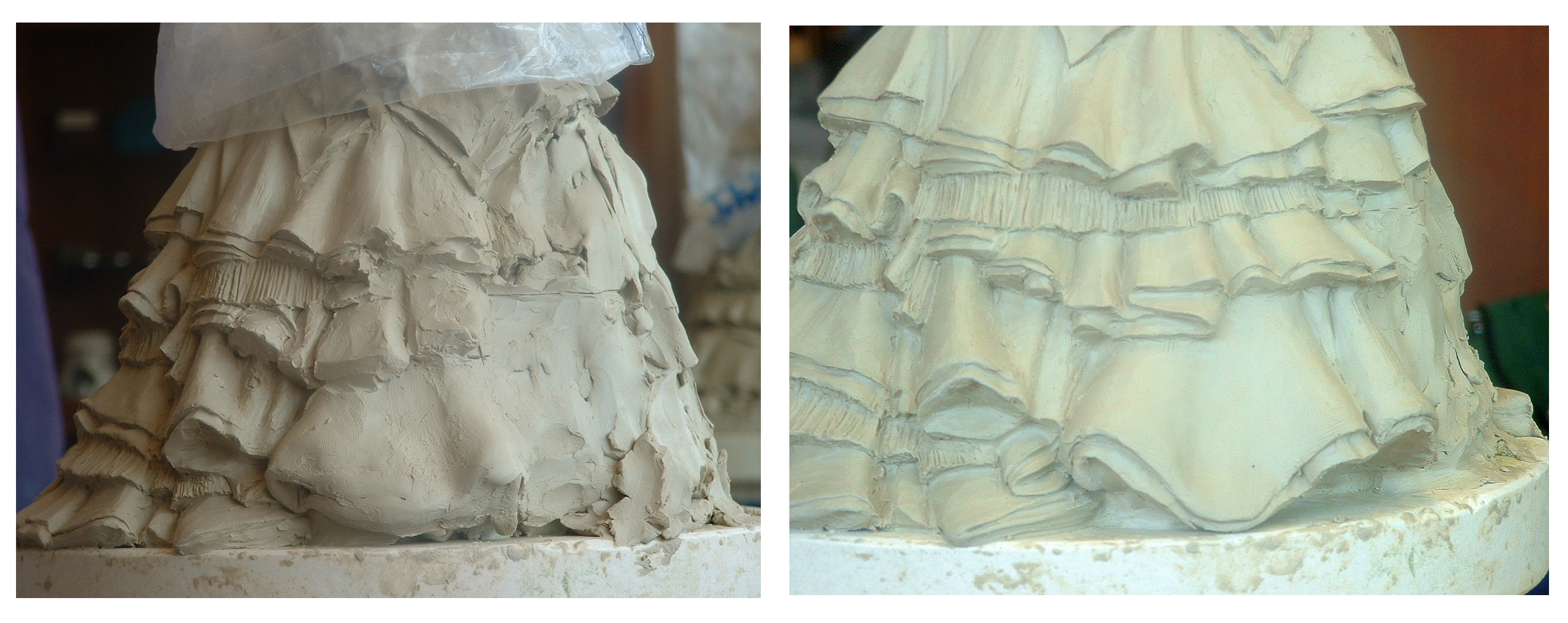
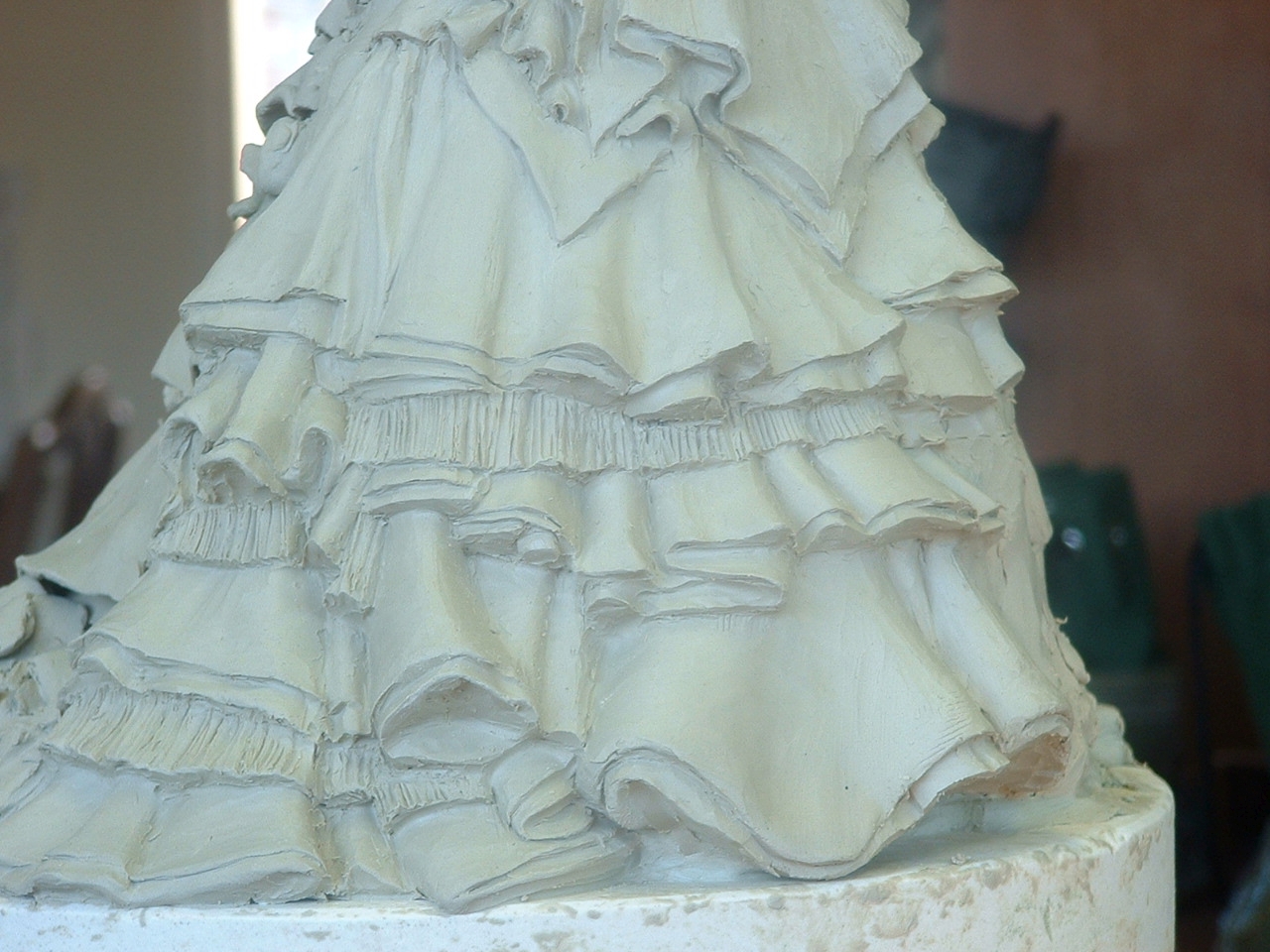 This sequence shows clearly how it is not advisable to put on intricate details before finalising the overall structure and composition.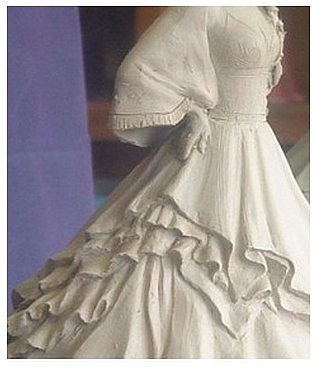
Second example: This queen coronation figure had a lot of intricate clay sculpture detailing and finishing to be done. There is no way this level of detail could be put onto a figure that might need compositional changes.
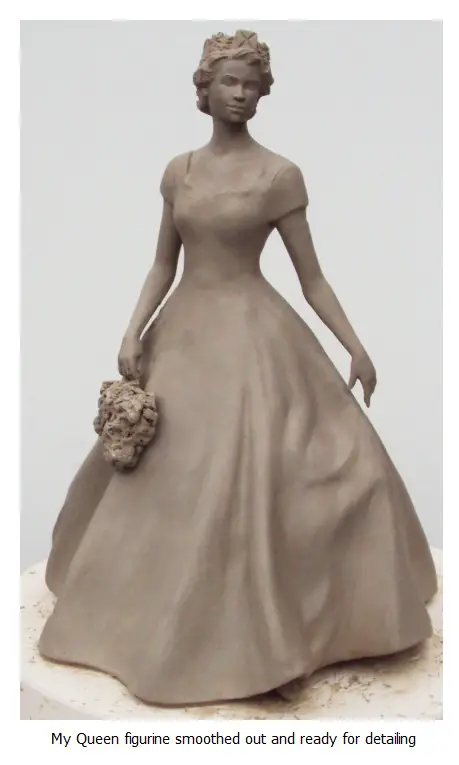
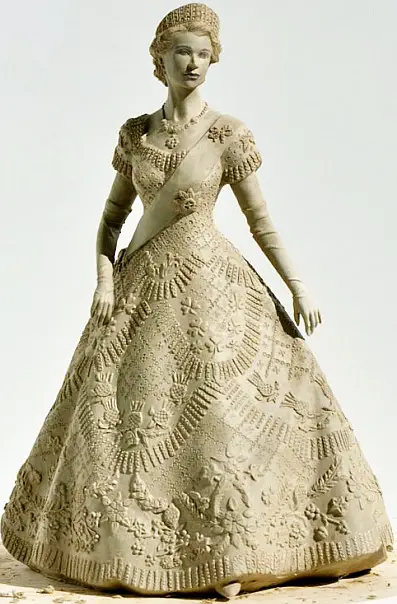 The Queen after applied detailing - note the transformation with intricate sprig moulding and lace pressings.
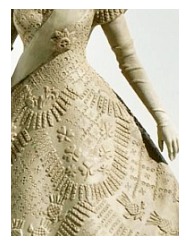 Queen figure dress detailing done by sprigging and careful pressing in parts - note how time consuming the precision
Stage 1: Surface Preparation – From Tool Marks to Clean Canvas
Before any fine work, the surface must be brought to a clean, even state. Tool marks, rough patches, and accidental ridges will show through every detail you add.
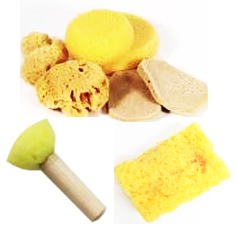 Various sponges for surface smoothing - no special equipment required
Sponging
Using a well-wrung sponge and a bowl of tepid water, work steadily from top to bottom to remove tool chatter and soften transitions. The sponge should be damp, not dripping - too much water turns the surface to sludge.
Protecting key areas: Faces, hands, and other delicate forms are not sponged; they're reserved for brush finishing. Sponges are too blunt for such subtle areas.
For collectors: Run a fingertip gently over a high-quality figurine—beneath the decoration, the surface feels consistent and almost silky. That quality comes from this stage, not from the glaze.
Stage 2: Brush Finishing – Polishing the Clay
Sponges get you most of the way; brushes finish the job. In my studio, I use three stiffness grades:
[INSERT IMAGE: mix-of-brushes.jpg HERE]
Caption: Three stiffness grades of brushes for progressive clay sculpture detailing refinement
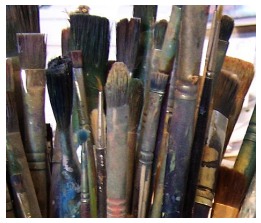 I have various grades of stiffness of brushes for progressive clay sculpture detailing & smoothing refinement
- Medium brush: Reaches corners and refines what the sponge can't reach
- Soft sable brushes: Remove medium-brush marks and build smooth, flowing surface
- Finest quill-handled sables: Reserved for faces and micro-details where a single careless stroke can ruin hours of work
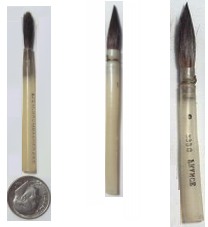
Here, clay sculpture detailing means "erasing the noise" so real detail has somewhere to live. The goal is not glass-smooth sterility, but controlled, intentional surfaces.
Stage 3: Pressing – Pattern and Texture Without Chaos
Pressing is one of the oldest ways to decorate clay, but used thoughtfully it can look surprisingly modern and refined. Over the years, I've pressed with everything from lace and plastic doilies to custom tools made from Milliput®.
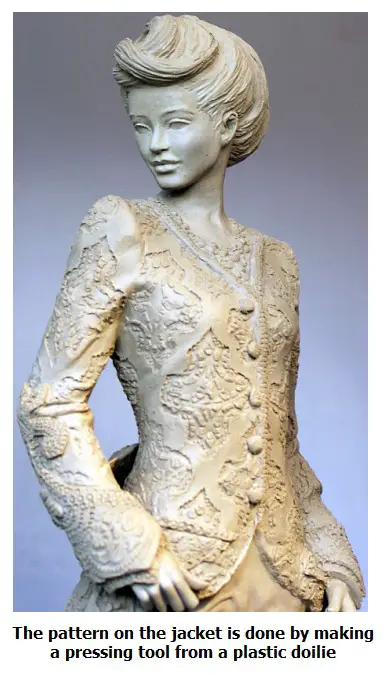 Pattern created by pressing techniques - note precision and consistency
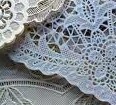 Vintage 1960's plastic doilies make excellent pressing tools if you can find them (these belonged to my mother)
Key Principles
- Press at the right moisture: Leather-hard clay holds crisp impressions without distortion
- Aim for even depth: Too deep and the impression looks crude and causes production issues; too shallow and it disappears under glaze or paint
- Test before committing: Always try a new pressing tool on scrap clay first
For collectors: Sometimes patterns appear machine-stamped. In reality, for many figurines, skilled use of pressing tools gives garments and accessories richness without drowning them in hand-carved fussiness.
Stage 4: Sprigging – Repeated Detail Done Professionally
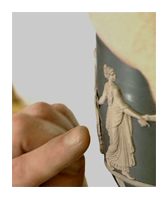
Sprigging is the process of creating a small clay motif in a plaster mould and then applying multiple identical "sprigs" onto the sculpture. It's how complex decorations, necklaces, brocade borders, repeated emblems, appear perfectly consistent.
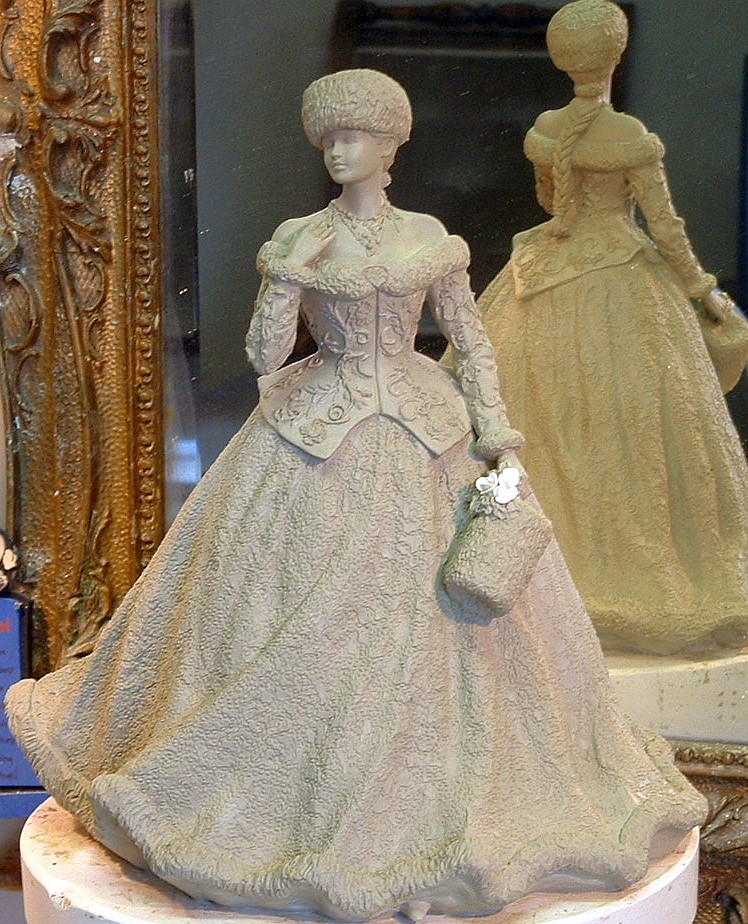
Typical Workflow
- Model one perfect master motif on a flat surface
- Take a plaster mould from it
- Press fresh clay into the mould, level with the top
- Let it set slightly, then demould
- Attach each sprig with slip and blend the edges
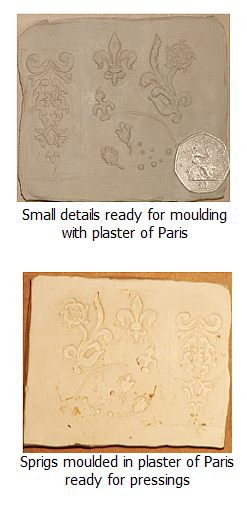
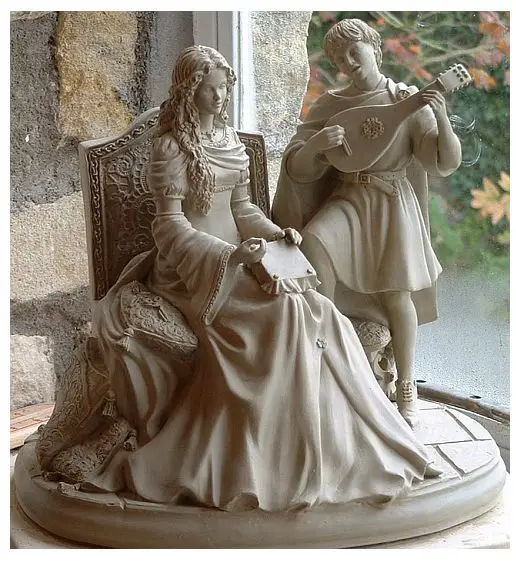
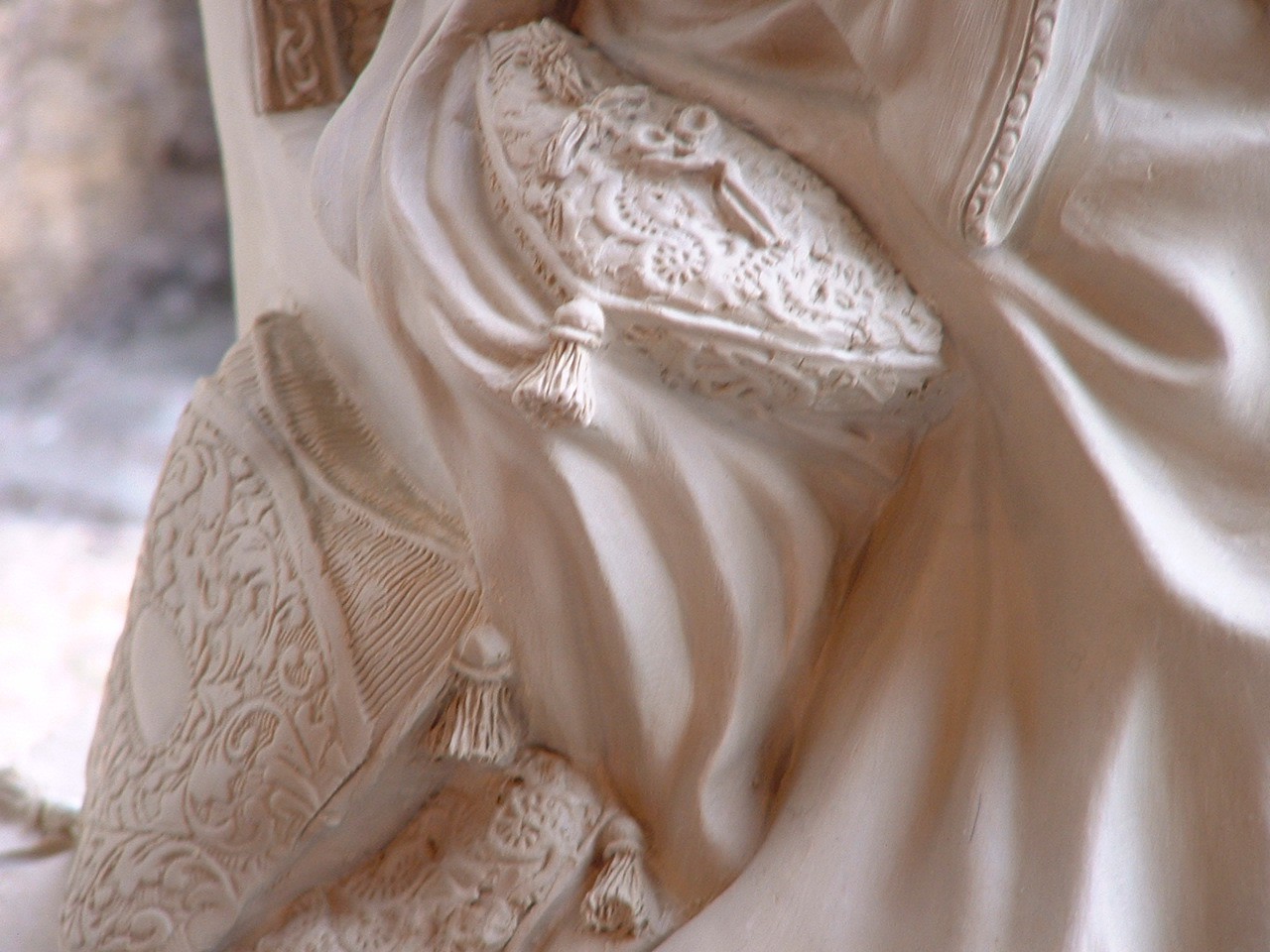 The tiny detail that applied advanced sprig moulding allows. Probably to a certain extent lost in production
Stage 5: Hair – Controlled Randomness
Hair can make or break a figure. Too "carved" and it looks like wood; too vague and it looks like a helmet. One of my favorite techniques uses very wet, slushy clay and the blunt end of a cocktail stick.
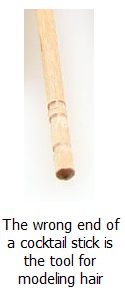
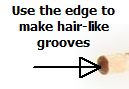
The secret is allowing the edge of the cocktail stick to form hair grooves
The Three-Stage Hair Process I Invented
Stage 1: I apply wet clay randomly
Prepare very wet, slushy clay by soaking overnight in a separate container. In the morning, mix it around but don't totally blend. Apply this soft clay quite freely over the head area. Don't over-plan, it's controlled randomness that gives life. Stage 2: Allow to dry and observe Image: celticface2.jpg Caption: Stage 2 - Clay dried naturally. Without additional sculpting, it already resembles hair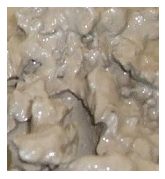
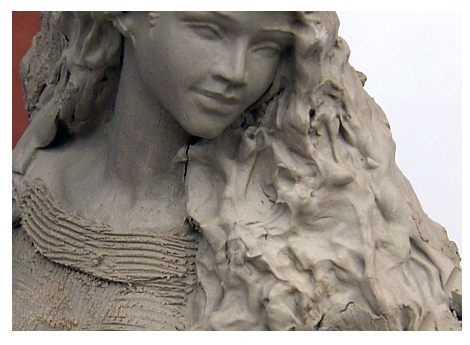
I have done nothing else to this hair apart from randomly applying wet clay and letting it set. It already looks a lot like hair, right?
Stage 2: Controlled Drying
Let it dry until firm but not bone-hard. You'll notice that just drying already creates a surprising hair-like texture.
Stage 3: Detail with cocktail stick
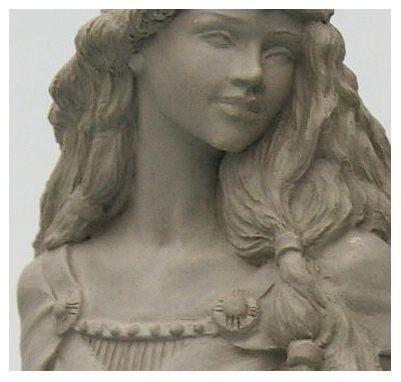
I worked in clay sculpture detailing with the blunt end of a cocktail stick
Work the surface with the blunt end of the stick, letting its edge "find" paths rather than scratching straight lines.
Used well, this produces hair that looks like it's really growing and moving, yet is strong enough to survive slip casting and everyday handling.
Stage 6. Fine Faces and Hands – The Moment of Character and Refinement
Collectors judge faces before anything else. A figurine with a mediocre face will never feel truly desirable, however good the drapery or colour. The difference between a charming figure and a highly valued collectible comes down to the face, and often, it's the final 1% of finesse that makes the difference.
Since the core structural work of the face (the geometry, skull form, and proportional accuracy) is covered in our separate guide on How to Sculpt Faces, this detailing stage focuses on two critical steps: Integration and Finessing Character.
Integrating the Face into the Rough Sculpt
Whether the face was pre-sculpted separately or built upon the rough head form, the join must be absolutely seamless. This step is about transitioning from two separate clay masses to a unified, living form.
- The Critical Join: The face must be attached securely to the rest of the head or figure using slip (very wet clay) and then meticulously blended into the neck, hair, or hood structure.
- Checking the Angle: Once joined, the head tilt and gaze direction must be checked from every angle. A fractional rotation can change the entire emotion of the figure. A final, gentle twist of the neck or a slight upward tilt of the chin can make the difference between a static piece and one that feels alive.
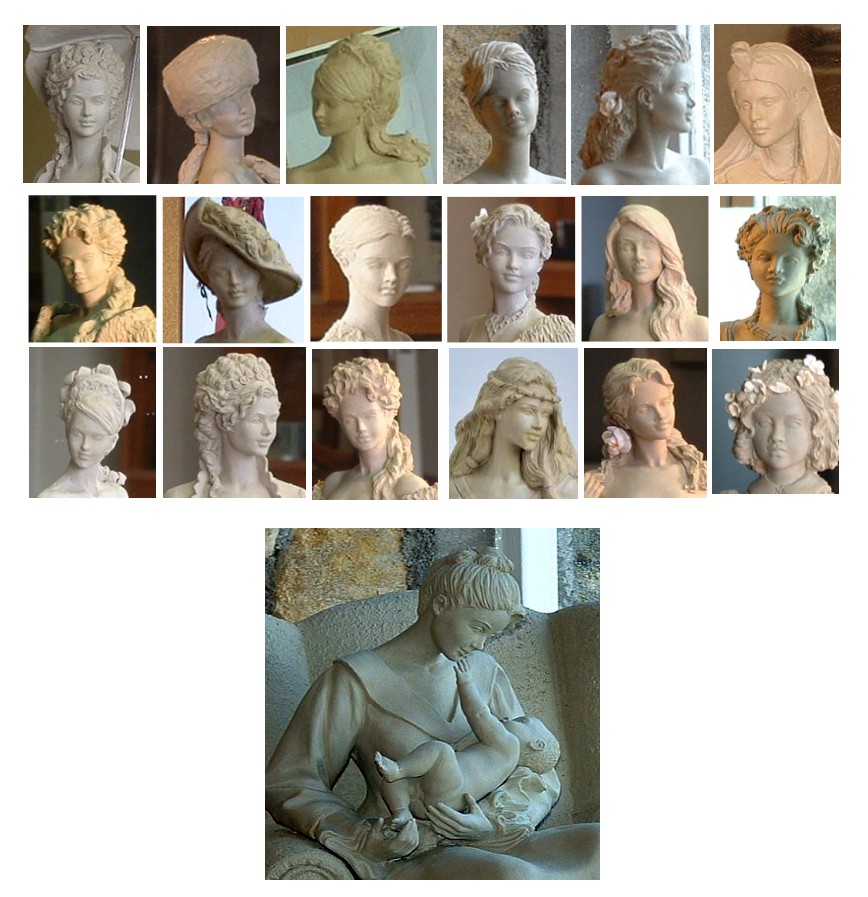 Each face on my figurine has to tell a story. In my sculpts I look for attitude, character and personality.
Refining Features and Capturing Soul
Once the face is locked in position and the surface is smooth, this is the moment for **final character application**. This is where the sculptor's artistry shines, introducing the tiny features that define the individual.
- Expression through Subtlety: Small changes in eyelid angle, mouth corners, or head tilt create serenity, sadness, joy, or mischief. Aim for subtlety; over-dramatized faces quickly become caricatures. A slight smile, a raise of the eyebrow, or a gentle contour of the jawline are applied now using fine tools.
- The Final Polish: Tools for this micro-detailing include tiny steel loops, fine wooden spatulas, and those quill-handled sable brushes for final smoothing. The surface must feel consistent and silky beneath the eventual paint or glaze.
If, after all these corrections, the face still feels wrong, professionals are not afraid to cut it back and rebuild. That courage to destroy imperfect work is the final part of mastery.
For collectors: This focus on final refinement and seamless integration is key. If you can spot the join between the face and the head, or if the expression looks clumsy or rushed, it reveals a breakdown in the final clay sculpture detailing process. A master-grade face feels like it was grown, not built.
The Hands - the Refinement Detail Collectors Notice
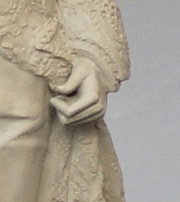


Hands are one of the most tricky aspects of modelling in ceramic water-based clay. The clay comes out of the packet way too wet to model hands. Yet fingers dry out very rapidly as they are so tiny. If you let them dry out too much they go brittle, and they cannot be re-wet and so have to be begun again. The ceramic clay is 90% less forgiving in working tiny areas like this than oil-based clays like plastiline.
Sculpting hands has made many a sculptor be as close to tears as they will get.
Here's how its done (for the sculptors):-
- Put some softish clay slightly larger than the hand is going to be onto the end of a cocktail stick
- Start working the rough hand shape.
- You start with softish clay from the bag, then as you are working, the clay is hardening off, gaining more resistance so you can start to cut and work the detail.
- These small hands are hard to do with pottery clay which wants to dry all the time.
- Keep your grit & determination, stick with it and you will get there.
- If a hand takes you longer at first, so it is drying out too much on the cocktail stick, think about attaching it (with the cocktail stick for support) to a larger lump of clay as a base (the principle is, the larger the volume of clay, the longer it takes to displace its moisture).
- You also have the option of putting that mini-sculpture on its own small damp plaster bat.
- You can then take this on and off the bat as required.
- The cocktail stick comes out once you are ready to apply to the piece to the sculpt.
For the Collectors:- The Sculptor's Greatest Challenge: Hands That Command Premium Prices
When examining a Royal Worcester or Coalport figurine at auction, discerning collectors immediately assess the hands. This single element separates amateur work from investment-grade pieces, and it's where many sculptors abandon their pursuit of mastery.
The Professional Hand-Sculpting Method
What collectors never see: The painstaking technique that creates those delicate, perfectly proportioned fingers on a 10-inch bone china figurine.
The Cocktail Stick Foundation Technique
Initial structure: Fresh, pliable clay slightly oversized for the intended hand is applied to a cocktail stick support. This seemingly crude beginning is deliberate, as work progresses and moisture evaporates, and the clay is worked on, the clay firms and shapes to the consistency needed for fine articulation.
The critical transition: What begins as malleable mass gradually achieves resistance, allowing the sculptor to cut, refine, and detail without distortion. This natural progression from soft to leather-hard is what enables the micro-precision collectors pay premiums for.
Why ceramic clay poses unique challenges: Unlike plasteline (which never dries) or polymer clay (which remains workable indefinitely), water-based ceramic clay is in constant evolution. The sculptor races against drying—particularly problematic at the miniature scale prestige figurines demand.
For Collectors: Reading Hand Quality
Look for markers that indicate a sculptor who persisted through the technical challenge rather than settling for "good enough." Such discipline appears throughout the piece and translates directly to long-term value.
The final integration: Once detail work achieves the sculptor's standard, the cocktail stick is removed and the hand is joined to the figure using proper slip-and-score technique. What remains is evidence of mastery that collectors recognize instinctively, even when they cannot articulate precisely what they are responding to.
Stage 7. Fabric Folds – Sculpting Movement and Weight
Fabric is one of the biggest dividers between amateur and professional clay figures. Good folds suggest gravity, weight, and movement; poor folds look like carved wood or cardboard.
Core Principles
- Know the anchor points: Identify where fabric is anchored (shoulders, belt, hands) and let primary folds radiate from those points.
- Add secondary folds: These respond to movement—twists, turns, and the way the body underneath shifts.
- Suggest fabric type: Heavy wool hangs in deep, slower curves; light silk or chiffon breaks into smaller, quicker ripples.
Hierarchy of Detail
In practice, I establish the main sweep of garments early in the process, then refine fold rhythms at the clay sculpture detailing stage:
- Primary folds: Large directional sweeps from tension points
- Secondary folds: Rhythmic variations adding visual interest
- Tertiary detail: Small creases where light and shadow enhance form
For collectors: This is why some gowns or cloaks feel almost musical in their flow—they were designed and refined, not scribbled in at the last minute.
Stage 8. Flowers and Botanical Details
Floral elements appear frequently on prestige figurines—roses held in hands, decorative blooms on gowns, botanical motifs in bases. These require specialized approaches. I make only those flowers that are sprigged on as part of the background detailing - those that can be included in the slip casting mpulds. Specialist flower artists in the factory hand make each tiny individual flower for each figurine in production. There is no moulding possible on intricate flowers, so each one you see on a finished figurine is an individually created work of art.
Repeated Botanical Motifs
- It is me, the sculptural master modeller, that makes the sprigged background and repeating flowers. Sprigging method: For repeated flowers or leaves, create master mould and apply identical sprigs. This ensures consistency across garment decoration.
- Pressing technique: For overall floral patterns, press with natural flowers or lace to create organic impressions.
 The white flowers are hand made and fired - I place these on top of the foliage and flatter flowers I am making as a background for the flower makers to make the hand made flowers.
It's my job the sculpt the background flowers and foliage only. The factory flower artists will hand make each individual flower for production.
For collectors: You cannot imagine how many flowers the factory artists have to individually make for a production edition of a flower rich piece like 'Summer Breeze' (above).
Timeline Reality: What Detailing Actually Takes
For a photo-realistic piece like 'English Garden' shown at top, the detailing process requires immense focus. Here is a realistic breakdown of the time investment, showing why high-quality sculpture commands a premium price:
Estimated Time Investment for Detailing
- Surface preparation (sponging and brushing) ~12-15 hours
- Pressing and sprigging (decorative patterns) ~20-25 hours
- Hair construction and refinement ~10-12 hours
- Facial features (finesse and character) ~15-20 hours
- Fabric fold detailing ~18-22 hours
- Botanical elements ~8-10 hours
- Final verification and touch-ups ~8-10 hours
Total detailing time: ~100-120 hours
This is why photo-realistic ceramic sculpture commands premiums—the time investment is genuine, the skill requirements are high, and the results cannot be faked or rushed.
From Detailing to Authentication – The Collector's Lens
Everything above matters twice: once for the sculptor, and once for the collector trying to judge quality and authenticity.
For collectors, clay sculpture detailing offers key clues:
Surface groundwork: A high-end piece has even preparation under the detail. If you can see rough tool marks peeking out under decoration, that's usually a red flag.
Consistency: Strong figurines are detailed "all round", not just at the front. Weak backs, soft faces, or rushed underside treatment reveal shortcutting.
Natural vs. mechanical: Good pressing and sprigging are integrated; you shouldn't be able to "see the stamp." Overly mechanical repetition or harsh edges suggest less careful work.
Faces and hands: These are always the acid test. If they feel crude, lifeless, or awkward, the underlying sculpting will not be master-grade, whatever the backstamp.
As someone who has spent years making master sculptures that factories turn into thousands of limited editions, these are exactly the cues used internally to judge whether a piece is up to standard. Understanding them allows collectors to separate genuinely refined clay figures from merely busy ones.
Taken together, they show what really happens when you sculpt from clay at a professional level, and why some pieces go on to become cherished, appreciating figurines while others remain forgettable.
For sculptors: These methods are the road map for a pro-level attainment goal. Others may want to create a more fine art based project and fire it themselves. Here is a really good guide for that type of clay sculpture: a hollowing for firing terracotta clay sculpture project.
For collectors: They are the key to reading what the sculptor's hands have already written in the clay.
Summary: The Discipline of Detailing
This page outlined the critical final stages of the sculpting process, emphasizing that master-grade quality hinges on patience and discipline—never detailing before structure is finalized. The workflow transforms a rough form into a collectible piece by focusing on **surface quality** (using sponges and brushes to erase tool marks), **pattern consistency** (via pressing and professional sprigging techniques), and **life-like character** (through controlled hair application and the final finesse and integration of the face).
Ultimately, the value of the final figure is dictated by the immense time commitment (often exceeding 100 hours for photo-realistic works) and the seamless execution of these details, providing collectors with the key criteria for authenticating and judging the quality of a master sculpture.
Your clay sculpture questions and other contributions are welcome.
Fill out the form below to ask a question or write a contribution about anything that's on your mind on the subject of clay sculpture etc.
Scroll below to see previous questions
Clay Chat
Please ask a question or tell us about your sculpting project (feel free to upload up to 4 photos)
What Other Visitors Have Posted
Click on the links to read the contributions from other visitors and my answers.
"Ceramic Sculpture Query- sculpting fabric folds
"Ceramic Sculpture Query - sculpting fabric folds:- Hi Peter, I have been sculpting for about ten years and like you, love it. I especially enjoy sculpting …

Inherited a china set?... Download my free 7-point checklist to instantly assess its potential value.
From the Studio
• Peter Holland Posters
• Sculpture Studio